

Short answer
Stop using the door and the opener straight away, keep everyone out from under it, and do not try to force the rollers back into the track. An off-track door is still connected to springs and cables under tension and can fall or twist further. Common causes are a car or bin hitting the door, a snapped lift cable, worn rollers and loose or bent track. A local garage door technician can secure the door, find the cause and realign or replace the damaged parts.
What "off track" looks like
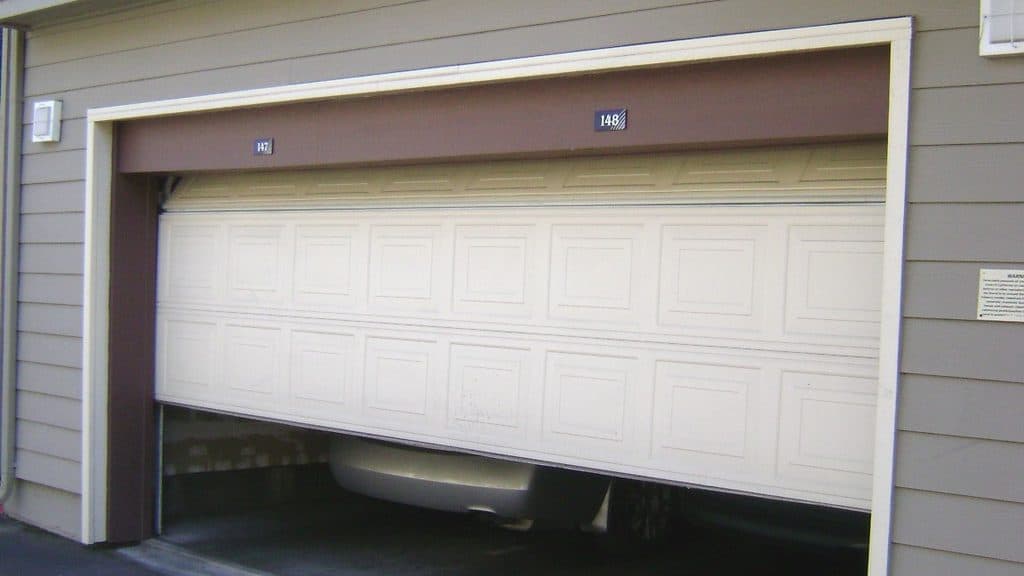
A sectional garage door rides on rollers inside two tracks, one on each side. The door is off track when one or more rollers have come out of the track. You might see:
- The door hanging crooked, with one side lower than the other
- A roller visibly outside the track, or a gap between the roller and the track
- The door stuck part way open and not moving
- A section bowed, twisted or tilted in the opening
- A bent or kinked section of track
- A lift cable hanging slack on one side
Sometimes the door is not fully off track yet but is binding: it shudders, stops, reverses or makes a scraping or popping noise at the same point every time. That is often the step before it comes off, and worth having checked before it gets worse.
What to do right now
- Stop pressing the opener button. An opener pulling on a jammed door can bend the top section, strip the opener's gears or snap a cable.
- Unplug the opener if you can reach the plug without standing under the door. That prevents someone else, or a remote in a car, from triggering it.
- Keep people, children and pets away from the door and out of the opening.
- Leave the door where it is. Do not try to lift it, push it down or knock rollers back into the track.
- Move the car only if you can do so without touching or driving under the door. If a vehicle has hit the door, Garaga, a garage door manufacturer, also suggests in its off track article letting your car and homeowner's insurers know.
- Take photos of both sides, the tracks, the cables and any damage. They help the technician and any insurance claim.
If your car is trapped inside or the door is stuck open overnight, see emergency garage door repair.
Common causes
Garaga's article on why doors come off their tracks lists the main causes as:
- Vehicle impact. Backing into or bumping the door is the most common cause in Garaga's experience, and even a low speed hit can push rollers out and damage the lower sections and the rest of the door system.
- Weak or misaligned horizontal tracks. Tracks can bend under the door's weight, and loose bracket bolts let them drift out of line.
- Worn or broken rollers. When one or two rollers fail, extra load falls on the others.
- A broken lift cable. The door's weight shifts to one side and the door twists out of the track.
Other things that commonly contribute:
- Something in the way. A bin, bike or toy under the door as it closes can knock the bottom section sideways.
- A broken spring. The opener then strains against a heavy, unbalanced door. See garage door spring repair.
- Loose hardware. Track brackets that have loosened from the wall or ceiling let the track shift over time.
- An opener with the wrong force setting, which can keep pushing a door that has met resistance rather than stopping and reversing.
Why it is a technician job
Putting a door back on track usually means taking weight off the door first, which means dealing with the springs and cables. A technician will typically:
- Secure the door so it cannot move or fall
- Release or control the spring tension where needed
- Free the rollers and, if necessary, remove damaged track sections
- Straighten, realign or replace bent track and loose brackets
- Replace any damaged rollers, hinges, cables or bottom brackets
- Re-tension the springs and check that the door is balanced
- Check the opener's force and travel settings and test the auto reverse and the safety sensors
If a section is creased or cracked, it may need replacing too. See garage door panel replacement.
Crooked, but still on track
A door that closes crooked, leaving a wedge of daylight on one side, is not always off track. Other causes include:
- A lift cable that has stretched or slipped on its drum, so one side is lower
- A bent bottom section or bottom bracket
- An uneven garage floor, which a bottom seal may not fully cover
- Tracks set at slightly different heights
The first two need a technician because they involve the cables and bottom brackets. The last two may be less urgent, but it is worth having someone look before the door starts binding. Our cable and roller repair page covers cable problems in more detail, and weatherseal replacement covers gaps along the floor.
What to ask a technician
- What caused the door to come off track, and is the cause fixed?
- Can the existing track be straightened safely, or does it need replacing?
- Were any rollers, cables, hinges or sections damaged, and which ones are you replacing?
- Did you check the springs and the opener settings afterward?
- Is the full price, with parts, labor and trip charge, in writing before work starts?
Be wary of any company that quotes a very low price on the phone and then finds a long list of extra parts once at your door. The Better Business Bureau has warned about garage door repair companies that use high pressure tactics to push immediate, costly repairs. Our guides to choosing a technician and garage door repair scams can help.
Preventing it from happening again
- Watch the door as it closes, and keep the opening clear of bins, bikes and toys.
- Check your mirrors and the door position before backing out.
- Look at the tracks, rollers and cables once a month for loose bolts, wobbling rollers or fraying. DASMA recommends monthly checks and an annual visit from a trained technician.
- Test the auto reverse regularly, as covered in our garage door maintenance guide.
- Replace worn rollers and frayed cables before they fail.
Frequently asked questions
Can I put my garage door back on the track myself?
It is not recommended. The door is still connected to springs and cables under tension, and DASMA's safety tips say the bottom brackets should only be adjusted by a trained technician. Forcing rollers back in can make the door fall or bend further.
Is it safe to leave my garage door off track overnight?
Usually yes, as long as nobody goes near it, the opener is unplugged and the door is not at risk of falling. If the door is stuck open and you are worried about security, or a car is trapped, see emergency garage door repair.
What causes a garage door to come off track?
Common causes include a vehicle hitting the door, bent or loose track, worn rollers and a snapped lift cable, according to Garaga's article on why doors come off their tracks. Objects under the door and a broken spring can also contribute.
Will my homeowner's insurance cover an off-track door?
It depends on your policy and on what caused it. Damage from a vehicle hitting the door is sometimes covered under auto or homeowner's policies, while wear and tear usually is not. Photograph the damage and check with your insurer before the repair.
Do I need a new door if mine came off track?
Often not. Many off-track doors need only realignment, new rollers, a cable or a track section. If one or more sections are creased or cracked, a technician may suggest replacing sections, and if several are damaged, replacing the door. See panel replacement.