

Short answer
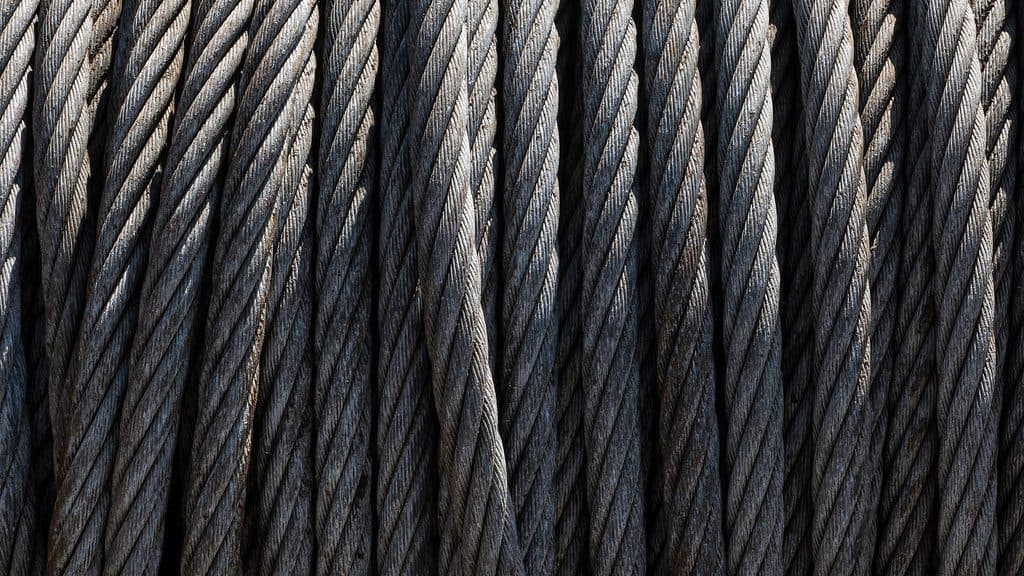
A frayed, kinked or snapped lift cable is a safety problem: stop using the door and have a local garage door technician replace it, because the cables connect to the springs and are under high tension. Worn rollers and cracked hinges are less urgent but cause noise, shaking and, eventually, a door that comes off its track. A technician will usually inspect all three together, along with the springs.
How cables, rollers and hinges work together
On a typical sectional garage door, the springs do the lifting, but they need the rest of the hardware to pass that force to the door and keep it moving straight:
- Lift cables run from the bottom brackets at each lower corner of the door up to cable drums on the spring shaft (torsion systems) or over pulleys (extension systems). When the springs unwind or contract, the cables lift the door.
- Rollers sit in the vertical and horizontal tracks on each side of the door, one per hinge or bracket, and carry the door along the tracks.
- Hinges join the sections so the door can bend as it moves from vertical to horizontal. Most hinges also hold a roller.
Because these parts work as a system, a problem in one often shows up in another. A worn roller can bind in the track and put extra load on a cable. A frayed cable can let one side of the door lag and twist the door in its tracks.
Lift cables: warning signs
DASMA, the industry association for garage door manufacturers, recommends in its garage door safety tips that homeowners visually inspect the cables that attach the spring system to the bottom brackets on both sides of the door. It warns that frayed or worn cables are in danger of breaking, which can cause injury, and that because of the high spring tension they should be replaced only by a trained technician.
Look for:
- Broken strands or fraying, especially near the bottom bracket and where the cable wraps on the drum
- Rust on the cable
- A slack cable on one side when the door is closed, or a cable that has jumped off its drum
- The door rising unevenly, with one side higher than the other
- The door hanging crooked or wedged in the opening
A cable that snaps is one of the causes of a door coming off its track. Garaga, a garage door manufacturer, explains in its article on why doors come off their tracks that when a cable breaks, the door's weight shifts to one side, throwing it badly out of balance. If that has happened, see garage door off track.
Why cables fail
Cables wear gradually. Common causes include:
- Ordinary wear over many open and close cycles
- Rust from moisture, particularly at the bottom of the door near the floor
- A cable rubbing on something it should not, such as a misaligned drum or a bent bracket
- A broken spring or an opener pulling on an unbalanced door, which shocks the cables
- A door that has been hit by a car, bending the bottom section or bracket
The cable itself is often the symptom rather than the cause. A good technician will look for the reason it failed so the new cable does not fray the same way. DASMA publishes an industry standard specifically for lifting cables on sectional doors, and a technician should use cable of the correct size and type for your door.
Rollers: warning signs
Rollers wear more slowly and are rarely an emergency, but worn rollers make the door louder and rougher and can eventually let the door leave its track. Signs include:
- Grinding, squealing or rumbling as the door moves
- Rollers that wobble, are chipped, flattened or cracked
- Rollers that no longer spin freely and instead drag along the track
- The door shaking or jerking as it travels
- Visible wear marks or grooves in the track
Garaga's off track article notes that when one or two rollers fail early, extra stress falls on the rest, which can lead to more roller failures or bent horizontal tracks.
Steel vs nylon rollers
Replacement rollers come in two broad types. A parts supplier's roller guide sums up the trade off:
- Steel rollers generally handle higher loads and cost less, but they are much louder.
- Nylon rollers run more quietly but tend to wear more quickly than steel.
- More ball bearings inside the roller generally mean smoother, quieter running and a slightly longer life, at a higher price.
Many homeowners replace worn steel rollers with nylon ones to cut noise. If noise is your main complaint, our noisy garage door page covers other causes too.
Hinges
Hinges crack or loosen over time, especially on the sections that bend the most as the door rolls over the curve in the track. Watch for:
- Cracks in the hinge leaf, often near the roller tube
- Loose or missing screws, or screws pulling out of the door skin
- Sections that flex or sag at the joint when the door moves
- A door that looks bowed or uneven when closed
A cracked hinge is usually a straightforward replacement. Hinges that keep tearing out of the door skin can point to a door that is out of balance or damaged, which is worth diagnosing rather than just re-screwing.
What you can safely do yourself
- Look, do not touch. With the door closed, check both lift cables from the bottom bracket up. Note any broken strands or rust.
- Watch the door move. Stand clear, to the side, and watch whether it rises evenly and whether any rollers wobble or stop spinning.
- Listen. Grinding usually points to rollers or bearings.
- Check hinge screws. Tightening a loose hinge screw on an upper section is generally fine; leave anything at the bottom corners alone.
- Test the balance only if nothing is broken. DASMA's safety tips note that if a door is awkward to operate by hand, the spring system may be out of balance.
What to ask a technician
- Why did this cable fail, and is the cause fixed?
- Are you replacing one cable or both, and why?
- Are the replacement rollers steel or nylon, how many bearings, and what cycle rating?
- Did you check the springs, drums and bottom brackets while you were there?
- Is the price for the whole job, including parts and the trip charge, in writing?
For help choosing someone, see how to choose a technician and our guide to garage door repair scams. This guide connects homeowners in McKinney, Frisco, Allen, Plano and Prosper with independent local garage door technicians.
Preventing cable and roller problems
- Do a quick monthly visual check of cables, rollers and hinges. DASMA recommends monthly safety checks and an annual visit from a trained technician.
- Keep the bottom of the door and the tracks free of debris.
- Lubricate rollers, hinges and bearings only as your door's manual recommends.
- Replace a broken spring promptly rather than letting the opener fight the door.
Our garage door maintenance guide has a full checklist.
Frequently asked questions
Is it safe to use my garage door with a frayed cable?
No. DASMA's safety tips warn that frayed or worn cables are in danger of breaking and should be replaced only by a trained technician. Leave the door closed if you can and keep people out from under it.
What happens if a garage door cable snaps?
The door loses support on one side, usually hangs crooked and can jump its track. Stop using the opener and do not try to lift the door. See garage door off track.
Are nylon rollers better than steel?
Nylon rollers are quieter; steel rollers generally carry higher loads and cost less. A parts supplier's roller guide notes nylon tends to wear faster, while more ball bearings improve smoothness and life. Ask what cycle rating is being quoted.
Can I replace garage door rollers myself?
Upper rollers are sometimes a homeowner job on a correctly balanced door, but the bottom rollers sit in brackets connected to the lift cables and spring tension, which DASMA says only a trained technician should loosen. If in doubt, leave it to a technician.
Why do my garage door cables keep coming off the drum?
Common reasons include a broken or weak spring, an unbalanced door, a bent track or a door that hit something on the way down. It needs a diagnosis rather than just rethreading the cable, which should not be done by a homeowner because of the spring tension.