
Short answer
With the door fully closed, pull the red emergency release cord straight down to disconnect the door from the opener, then lift the door by its handles or gripping points. A healthy door lifts smoothly and stays where you leave it; if it feels very heavy, won't stay up, or drops, stop, because a spring is probably broken. Never pull the release while the door is open if you suspect a broken spring, since the door can fall. When power returns, reconnect the trolley and run the opener through a full cycle.
Before you touch the cord
The red emergency release is designed to be pulled with the door closed. Chamberlain, which makes LiftMaster and Chamberlain openers, says in its manual operation instructions to use the release only when the door is fully closed, if possible, and never to use the release handle to pull the door up or down.
The reason is weight. The springs above or beside your door carry almost all of it. The industry standard for counterbalance systems, ANSI/DASMA 103, defines counterbalance tension as a force approximately equal to the weight of the door. When the springs are working, you are only lifting the small difference. When a spring has broken, you are lifting most of the door, and an open door that is released from the opener can come down hard.
Step by step: opening a closed door by hand
- Check that nothing is blocking the door and that nobody is standing under it or near the tracks.
- Unplug the opener if the power might come back while you work, so the motor can't start unexpectedly.
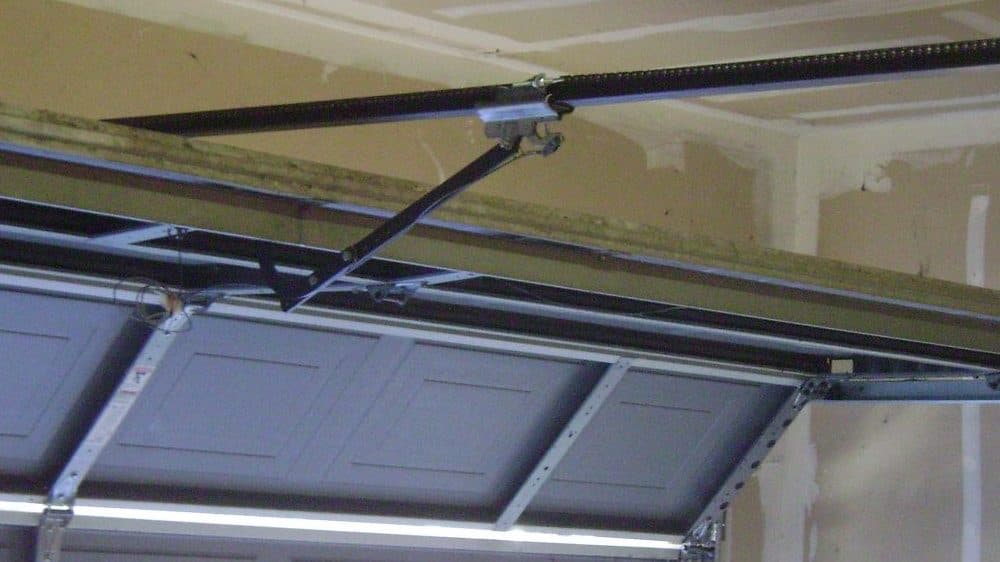
- Find the red cord or handle. It hangs from the trolley, the carriage that rides along the rail between the motor and the door. When the door is closed, the trolley sits near the top of the door.
- Pull the cord straight down, firmly. On most rail openers you'll hear or feel the trolley release arm snap free. Chamberlain notes that on some T-rail models, pulling down and then back toward the motor keeps the trolley from reconnecting on its own, which is handy if you'll be operating the door by hand for a while.
- Lift from the handles or gripping points, not the section joints. DASMA's Technical Data Sheet 165 warns that the joint between two sections is not a suitable grip and can cause serious injury. The standard calls for handles or gripping points low on the door, inside and out.
- Lift slowly and pay attention to the weight. A balanced door should rise with modest effort and keep moving only as fast as you push it.
- Raise it fully open and let go gently. The U.S. Consumer Product Safety Commission's garage door safety sheet explains that a properly balanced door stays in place when stopped at any partly open position. If yours drifts down or falls, lower it with control and stop using it.
Why a very heavy door means stop
If the door feels like a dead weight, won't stay open, or slams shut, Chamberlain's instruction is to stop immediately and contact a garage door professional. The industry checklist for home inspectors, DASMA TDS 167, is blunt: if a spring is broken, do not operate the door until the spring is replaced, and don't try to repair or adjust springs, cables, brackets or their mounting points yourself.
Signs that a spring is the problem:
- A loud bang from the garage, often when nobody was using the door
- A visible gap in the coil of a torsion spring on the shaft above the door
- The door lifts crooked, higher on one side than the other
- Cables slack, frayed or off their drums at the top corners
This Old House lists the same warning signs in its spring replacement guide. If you see any of them, read why DIY spring repair isn't worth it and arrange garage door spring repair.
Getting the car out when the door won't stay up
If the springs are fine but you're alone and worried about the door drifting, get a second person to hold it while you drive out, then close it together. If the springs are not fine, leave the car where it is. A vehicle is not worth an injury, and a falling door can damage the car too. This is one of the situations covered under emergency garage door repair.
Locking the door while the opener is disconnected
A connected opener holds the door shut. Once you pull the release, the door is free to be lifted from outside. Before you leave or go to bed:
- Use the side lock if your door has one. Many sectional doors have a sliding bolt on the inside that engages a slot in the vertical track. An authorized Overhead Door distributor's power outage guide recommends sliding it into the track to lock the door, then sliding it back before you reconnect the opener.
- Or reconnect the trolley with the door closed, even without power, so the opener's drive holds it.
- Lock the door from the house into the garage as well.
Reconnecting the opener when power returns
The exact method depends on the opener, so check your manual. Chamberlain's instructions cover the three common layouts:
- Square rail (many LiftMaster and Chamberlain chain and belt units): pull the cord toward the opener until the release arm is horizontal again, then run the opener through one full open and close cycle. The trolley reconnects on its own.
- T-rail: pull the cord straight down, then run the opener. It reconnects on the next cycle.
- Wall-mount (jackshaft) openers: pull the release handle down firmly until it clicks, then run the opener.
Do this with the door closed and the side lock unlocked. Stand clear while the opener cycles, and watch the door all the way up and down. Then test the safety reverse: the CPSC recommends placing a 2x4 flat on the floor in the door's path and making sure the door reverses when it touches it. If it doesn't, disconnect the opener and have it serviced. See garage door sensor repair if the door won't close afterward.
Battery backup: skip the red cord next time
Many current openers can run on a built-in battery during an outage. California made this mandatory: SB 969 requires automatic openers sold or installed in homes there to have a battery backup function, beginning July 1, 2019. Elsewhere it's an option to ask about when you replace an opener. Our opener types guide compares models.
If you already have battery backup, test it now and then. DASMA TDS 167 describes the test: with the door closed, unplug the opener and run the door up and down from the wall button or remote. If it doesn't work, the battery may need replacing; your opener manual lists the part.
When to call a technician
- The door feels very heavy, won't stay open, or falls
- A spring, cable or bottom bracket looks broken, loose or out of place
- The door is open and you suspect a broken spring
- Rollers have come out of the track or the door is crooked. See garage door off track.
- The opener won't reconnect or the door won't reverse on the 2x4 test
When you call, say whether the door is open or closed, whether a car is trapped inside, and what you saw or heard. That helps a technician bring the right springs and cables.
Frequently asked questions
Can I pull the emergency release when the garage door is open?
Avoid it. Chamberlain says to use the release only when the door is fully closed, if possible. If a spring is weak or broken, an open door released from the opener can fall quickly. If the door is stuck open and you suspect a spring problem, keep everyone clear and call a garage door technician.
How heavy should a garage door feel when I lift it by hand?
Light enough to lift with modest effort, and it should stay put when you stop partway. The CPSC describes a properly balanced door as one that stays in place at any partly open position. A door that feels like a dead weight or drops usually has a spring problem.
How do I reconnect my garage door opener after pulling the red cord?
With the door closed and any side lock unlocked, reset the release arm (on many models by pulling the cord toward the opener) and run the opener through a full cycle. The trolley clicks back onto the carriage. Check your opener manual, since square rail, T-rail and wall-mount openers differ slightly.
Is my garage secure with the opener disconnected?
Not fully. Once the trolley is released, the door can be lifted from outside. Use the door's side lock if it has one, or reconnect the trolley with the door closed. Remember to unlock the side lock before running the opener again.
My opener has battery backup but didn't work in the outage. Why?
Most often the battery has run down or reached the end of its life. Test it by unplugging the opener with the door closed and running the door from the wall button. If it doesn't move, replace the battery with the part your opener manual specifies.